A Call To Prayer
The teachings from a month in Istanbul

Istanbul has always been a romantic vision for me — the exotic currents of Eastern and Western culture, my love of crossroads and thresholds. I dreamt of languidly meandering through the old city bazaar, eating rose-scented sweets, an oud strumming somewhere nearby.
While this imagery does hold true in moments, it was slowly dismantled during my month-long stay as I entered further into the acutal reality of life here.
It began on the very first night we landed. We checked into our Airbnb to find it missing a toilet seat, a window, and sturdy walls. The place was crumbling. The furniture was different from the photos — something we later learned was common, as hosts often bring in furniture just for the pictures and then remove it afterward. Since we had booked an entire month, we decided to change plans.
Plan B was an emergency backup: a hotel around the corner. The next morning, I woke with a multitude of bedbug bites and swollen welts that made me look diseased (I’m allergic to them). The welts stayed for two weeks, followed by a bout of ringworm from petting street cats. I felt beautiful.
Plan C was another Airbnb, where we arrived to discover only one single bed.
Plan D was yet another Airbnb, described as a “Greek Apartment” (puzzlingly) with a caveat that the area was “run down and old.” We arrived to find a simple apartment with a cheap refit — once again missing much of the furniture — in a ghetto-like neighborhood. I contacted the host and demanded the rug and plants from the listing photos, and to my surprise, they were delivered the next day. We let go of the other missing features that were in the listing photo’s:
Luxury bedding
Cushions
Wall artwork
An extra ten square meters
And we settled into our Istanbul life.
We spent the next month surrounded by piles of rubbish, stray cats, crumbling buildings, gypsy weddings that took over the streets until 2 a.m. with excruciatingly loud house music, and a neighbor who spent eighteen hours a day screaming at his elderly mother (who screamed back, don’t worry).
Below our apartment, a cat had just given birth to a litter of kittens. I saw this as a sign — the grace of new life. I bought them a little house, fed them and loved them every day. These tiny beings became the focus of my longing to find beauty in the not-so-beautiful, to embrace the unexpected Istanbul that was unfolding before us.
On Sundays, the streets transformed from rubbish-strewn into a vibrant market filled with colorful stalls selling cheeses, spices, pickles, and sweets. It felt like walking through a whole new neighborhood — one of abundance, artistry and the wealth of fresh food.
The next day the streets would return to their usual chaotic mess.
Leaving the apartment each morning I would notice that our alleyway always seemed changed — traces of the previous night scattered on the ground: a new piece of litter, fish bones tossed to the cats, a piece of clothing. To me, it felt like a living record of what had unfolded while we slept — a constantly changing landscape.
We lived an ordinary life in that little ghetto — working online, joining a gym, discovering a local kebab merchant who became our daily meal planner. We merged with the rhythm of this city that never truly sleeps, wandering the streets at 2 a.m., sipping tea, finding late-night hamams, and, of course, eating kebabs.
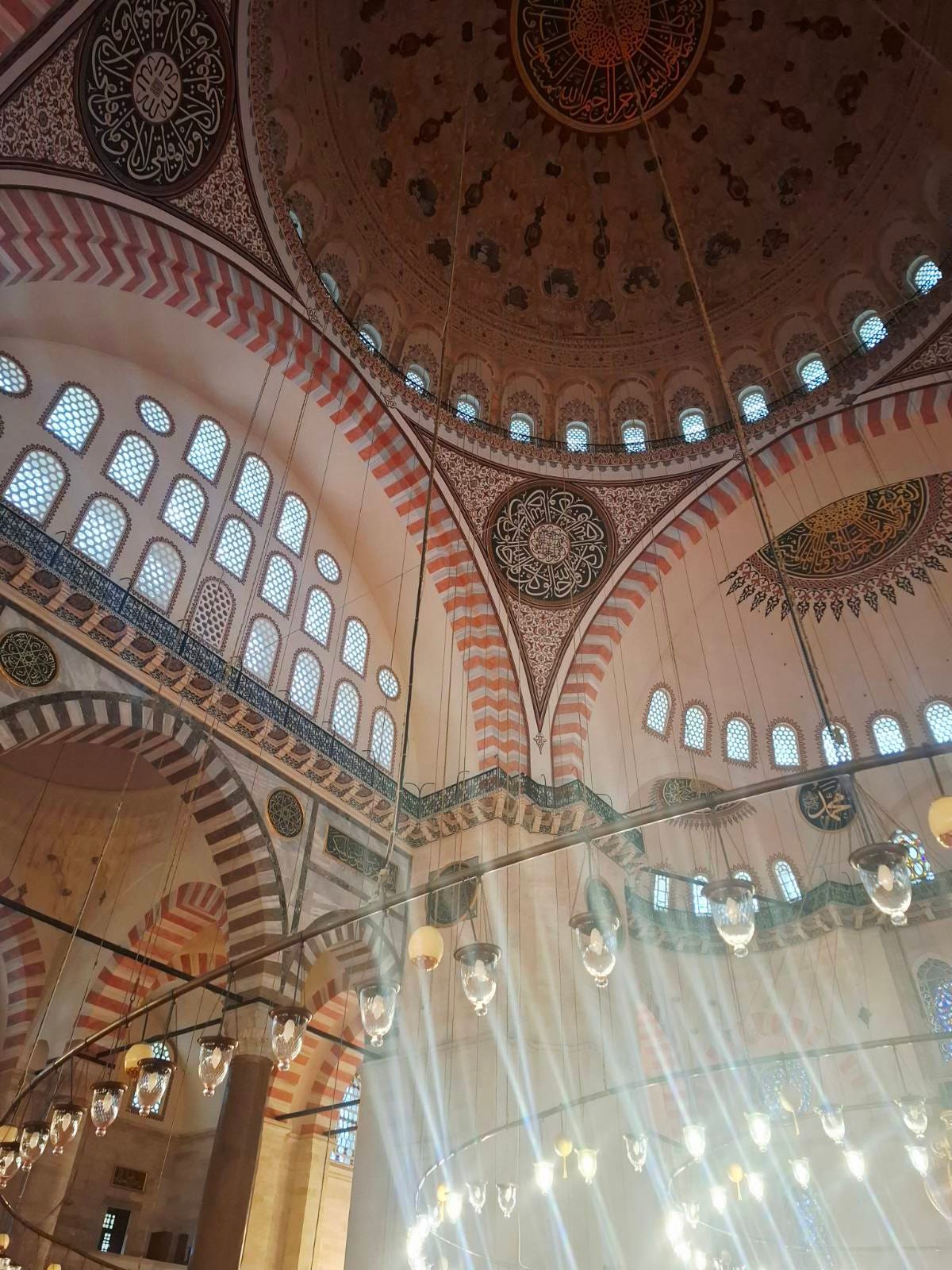
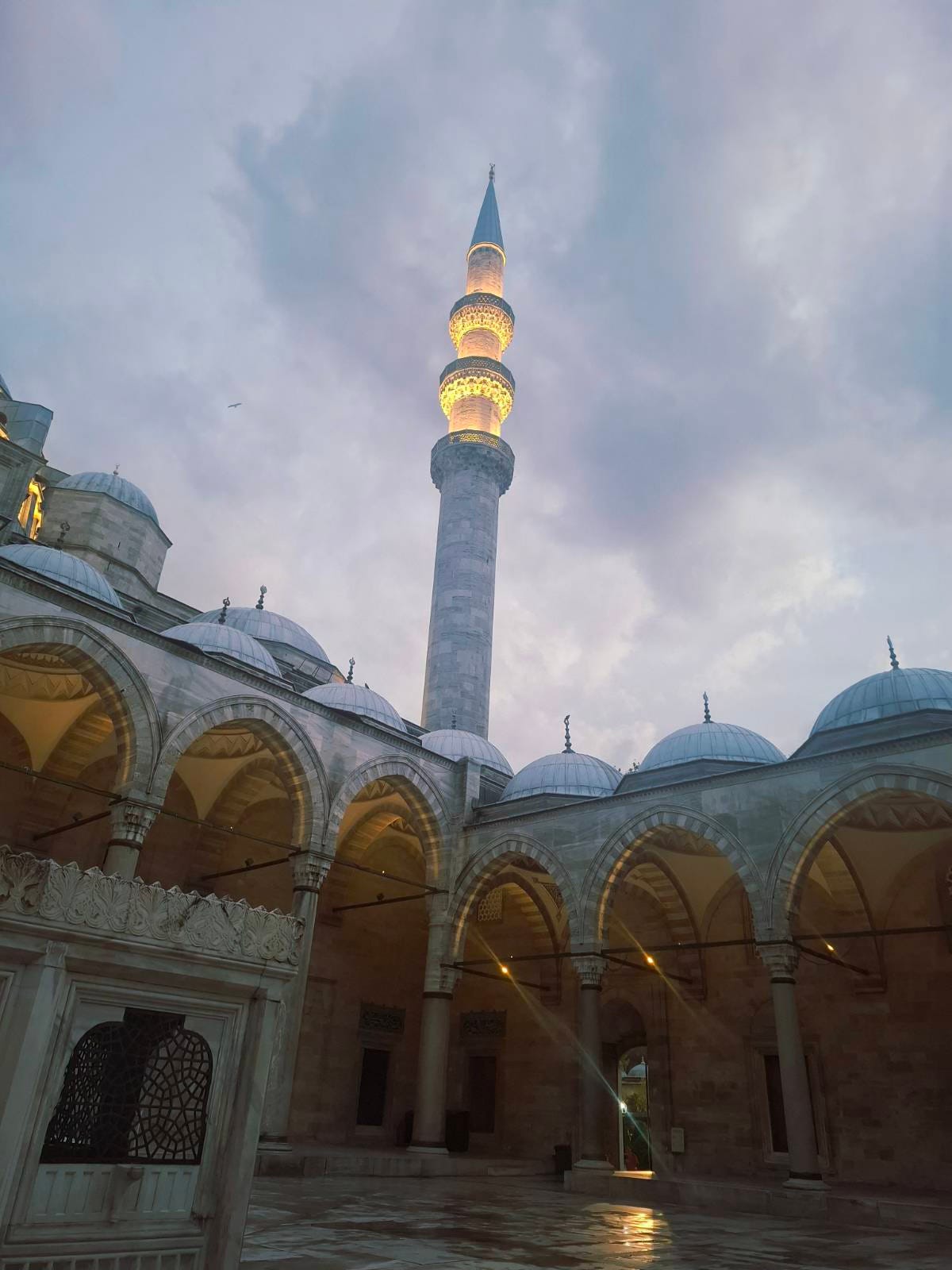
We bought prayer mats and visited the local mosque, letting the ezan — the call to prayer that echoes across the city five times a day — draw us into moments of stillness and presence. Every call touched me deeply; I never tired of hearing it, even the 5 a.m. call that woke me from sleep.
We explored the bazaars, sneaking free samples of Turkish delight, baklava, and perfumes whenever we could. I was constantly awed by the Ottoman architecture — the devotion etched into every door and wall, the striking contrast between the womb-like domes and the phallic minarets stretching toward the sky.
We would pause to admire bursts of bougainvillea climbing the grey, weathered walls. Each night we returned to our apartment, waiting for the inevitable evening chaos — a party, a wedding, some new eruption of life in the streets below. We woke each morning to a changed alleyway, littered with fresh traces of the night before.
By our third week, we faced something profoundly disturbing.
One of the kittens we had cared for was killed — its tiny body covered in blood, lying lifeless in the street. A few days earlier, a man had taken one of them in front of us. He sat around the corner, holding it in his hands. Something in his energy unsettled me — I felt certain, almost afraid, that he would harm it. We didn’t confront him. I still carry that thought: maybe we could have approached him, used Google Translate to speak with him, or taken the kitten from his hands. We didn’t see it again after that moment and two days later, its lifeless body appeared.
Integrating that brutality was difficult — as was resisting the waves of hatred and disgust that rose inside me, the fear that its death had been torturous. We created a small altar around the body, scattering herbs and petals, lighting incense. Alexandre wrote a note in Turkish:
“A being from Allah, whose life was deliberately taken.”
We prayed as locals looked on. One gypsy woman approached, shaking her head and spoke in Turkish to the locals that were around the street but mostly people just ignored us. We created a small shrine of stones draped in green vines and leaves — something to make people notice. We wanted its life to be recognised, its death to not go unseen, its body to not be treated as just another piece of rubbish dumped on the street.
Then came the process of integrating the experience — finding a place for it within the living mythology of our time in Istanbul, working with the heart to make sense of it all.
In many ways, the ghetto is a type of jail for those living here — which we had the luxury of leaving. Many people living in these streets would never be able to leave, take a holiday nor do they have the power to even change their circumstances. This was especially true for the gypsy community here: their living rooms were street corners, their children wandering the streets into the early hours of the night trying to sell flowers to survive, some as young as four.
Poverty is cruel.
And through that lens, I found compassion — even for the man who caused harm.
That was the gift my time here offered: to work with my heart’s capacity for compassion, to expand what is right or wrong into a broader understanding of suffering.
It was my call to prayer.
Now, as I write these words from the airport, I am acutely aware of the privilege of my departure.
I am grateful for my time in this city, for every fleeting, ordinary moment.
I am grateful for how Istanbul held a mirror to both beauty and hardship — and for how its complexity unfolded within me.
Istanbul dismantled the romantic visions I carried, yet revealed a deeper kind of beauty — one found through rubbish and rubble, through the living ecosystem of a small alleyway that reflected, so profoundly, the cycles of life and death continually shaping these streets.